Puffer Finance is Revolutionizing Liquid Staking and Restaking in the DeFi Ecosystem

Puffer Finance is emerging as one of the most innovative protocols in the decentralized finance landscape, offering users unprecedented opportunities to maximize their Ethereum staking rewards while maintaining liquidity. As the cryptocurrency market continues to evolve, Puffer Finance stands at the forefront of liquid staking technology, providing solutions that address the fundamental challenges faced by both individual stakers and institutional participants in the Ethereum ecosystem.

Understanding What Puffer Finance Brings to the DeFi Space

Puffer Finance is a decentralized liquid staking protocol built on Ethereum that enables users to stake their ETH while receiving liquid staking tokens in return. Unlike traditional staking mechanisms that lock up assets for extended periods, Puffer Finance allows participants to maintain liquidity and capital efficiency while still earning staking rewards. This innovative approach has positioned Puffer Finance as a leading solution for those seeking to optimize their cryptocurrency holdings without sacrificing flexibility.

The core mission of Puffer Finance is to democratize access to Ethereum staking rewards while simultaneously strengthening the network's decentralization. By lowering the barriers to entry for node operators and providing innovative security mechanisms, Puffer Finance has created an ecosystem where both small and large participants can benefit from staking activities. This inclusive approach sets Puffer Finance apart from many competing protocols in the liquid staking space.

The Technical Architecture Behind Puffer Finance

Native Liquid Restaking Token

Puffer Finance has developed a sophisticated native liquid restaking token system that represents staked ETH positions. When users deposit their Ethereum into the Puffer Finance protocol, they receive pufETH tokens that can be freely traded, used as collateral in other DeFi protocols, or held to accumulate staking rewards. This mechanism ensures that capital remains productive even while contributing to Ethereum network security through Puffer Finance.

Secure Signer Technology

One of the distinguishing features of Puffer Finance is its implementation of secure signer technology. This innovation protects validators from slashing penalties, which are punishments imposed on validators who behave maliciously or fail to perform their duties correctly. By incorporating this protective layer, Puffer Finance significantly reduces the risk associated with running validator nodes, making participation more accessible to a broader range of operators.

TEE Technology Integration

Puffer Finance has partnered with Automata Network to leverage Trusted Execution Environment technology, redefining how Actively Validated Services operate within the ecosystem. This collaboration demonstrates the commitment of Puffer Finance to implementing cutting-edge security measures that protect user assets while enabling innovative functionality. The integration of TEE technology positions Puffer Finance at the technological forefront of the liquid staking industry.

How Puffer Finance Compares to Traditional Staking

Traditional Ethereum staking requires users to lock up a minimum of 32 ETH to run a validator node, a significant barrier that excludes many potential participants. Puffer Finance eliminates this requirement by pooling resources from multiple users, allowing anyone to participate in staking regardless of their capital availability. This democratization of staking access is a fundamental value proposition of Puffer Finance.

Furthermore, traditional staking locks assets for extended periods, preventing users from accessing their capital for other opportunities. Puffer Finance solves this problem through its liquid staking token mechanism, enabling users to maintain exposure to staking rewards while freely utilizing their capital elsewhere in the DeFi ecosystem. This dual benefit of rewards plus liquidity has driven significant adoption of Puffer Finance among sophisticated cryptocurrency users.

The Puffer Points Reward System

Puffer Finance has implemented an innovative points-based reward system that incentivizes user participation and loyalty within the ecosystem. Through various campaigns and chapters, Puffer Finance distributes Puffer Points to users who engage with the protocol in meaningful ways. These points represent recognition of user contributions and may provide additional benefits within the Puffer Finance ecosystem.

The campaign structure of Puffer Finance includes multiple chapters, each introducing new opportunities for users to earn rewards. Chapter 3 of the Puffer Finance campaign brought fresh incentives for community members, encouraging continued engagement with the protocol. Users are advised to follow Puffer Finance official channels to stay informed about upcoming campaigns and reward opportunities.

Security Measures Implemented by Puffer Finance

Smart Contract Security

Puffer Finance prioritizes the security of user funds through rigorous smart contract auditing and testing procedures. Similar to other established DeFi protocols, Puffer Finance understands that smart contracts eliminate the need for intermediaries but must be thoroughly vetted to ensure safety. The development team at Puffer Finance has implemented multiple layers of security to protect against potential vulnerabilities.

Decentralized Validator Set

By encouraging a diverse and decentralized set of validators, Puffer Finance contributes to the overall security of the Ethereum network while protecting against single points of failure within its own protocol. This approach aligns with the broader ethos of decentralization that underlies the cryptocurrency ecosystem and demonstrates the commitment of Puffer Finance to sustainable growth.

Anti-Slashing Mechanisms

The anti-slashing technology employed by Puffer Finance represents a significant advancement in validator protection. By implementing secure signing mechanisms and monitoring systems, Puffer Finance minimizes the risk of validators being penalized due to technical failures or honest mistakes. This protection makes participating in Puffer Finance as a node operator significantly less risky than traditional validation approaches.

The Role of Puffer Finance in the Restaking Ecosystem

Puffer Finance plays a crucial role in the emerging restaking ecosystem, which allows staked assets to secure multiple protocols simultaneously. This innovation multiplies the utility of staked ETH, enabling users to earn additional rewards beyond basic staking returns. Puffer Finance has positioned itself as a key infrastructure provider in this rapidly growing sector of decentralized finance.

The restaking capabilities offered by Puffer Finance enable users to contribute to the security of various Actively Validated Services while maintaining their liquid staking positions. This composability is a hallmark of innovative DeFi protocols and demonstrates the forward-thinking approach of the Puffer Finance development team.

Community and Governance in Puffer Finance

Puffer Finance maintains an active and engaged community across various social media platforms and communication channels. The protocol regularly updates its community members about developments, partnerships, and opportunities through official announcements. This transparent communication approach has helped Puffer Finance build trust and loyalty among its user base.

The governance structure of Puffer Finance is designed to give community members a voice in the protocol's development and direction. As the protocol matures, Puffer Finance aims to progressively decentralize decision-making processes, ensuring that the community has meaningful input into important protocol parameters and upgrades.

Partnership Ecosystem of Puffer Finance

Puffer Finance has established strategic partnerships with various projects in the cryptocurrency ecosystem to enhance its capabilities and reach. The partnership between Puffer Finance and Automata Network exemplifies this collaborative approach, bringing advanced TEE technology to the protocol. These partnerships strengthen the overall value proposition of Puffer Finance and expand the opportunities available to users.

By integrating with other DeFi protocols and infrastructure providers, Puffer Finance creates a more interconnected and efficient ecosystem for its users. These integrations allow pufETH holders to utilize their liquid staking tokens across a wide range of applications, maximizing the utility of their participation in Puffer Finance.

Getting Started with Puffer Finance

Depositing ETH

Users interested in participating in Puffer Finance can begin by depositing their Ethereum into the protocol. The process is designed to be straightforward and accessible, even for users who are relatively new to decentralized finance. Upon depositing, users receive pufETH tokens representing their stake in Puffer Finance.

Earning Rewards

Once deposited, users automatically begin earning staking rewards through Puffer Finance. These rewards accumulate over time and are reflected in the value of pufETH tokens. Additionally, participants may be eligible for Puffer Points and other incentives offered by Puffer Finance campaigns.

Utilizing Liquid Staking Tokens

The pufETH tokens received from Puffer Finance can be used throughout the DeFi ecosystem. Users can provide liquidity, use tokens as collateral for loans, or simply hold them to accumulate staking rewards. This flexibility is a key advantage of participating in Puffer Finance compared to traditional staking approaches.

The Future Roadmap of Puffer Finance

Puffer Finance continues to develop and expand its protocol with ambitious plans for the future. The team behind Puffer Finance is committed to innovation and regularly releases updates that enhance functionality and user experience. As the liquid staking and restaking sectors evolve, Puffer Finance aims to remain at the forefront of technological advancement.

Future developments from Puffer Finance may include expanded restaking capabilities, additional security features, and deeper integrations with the broader DeFi ecosystem. The protocol's roadmap reflects a long-term vision for sustainable growth and continued relevance in the rapidly changing cryptocurrency landscape.

Why Puffer Finance Matters for Ethereum's Future

Puffer Finance contributes to the health and security of the Ethereum network by encouraging broader participation in staking activities. By making staking accessible and capital-efficient, Puffer Finance helps increase the total amount of ETH securing the network while promoting decentralization among validators. This contribution extends beyond the immediate benefits to Puffer Finance users and supports the entire Ethereum ecosystem.

As Ethereum continues its evolution as a proof-of-stake network, protocols like Puffer Finance will play an increasingly important role in maintaining network security and efficiency. The innovations pioneered by Puffer Finance may influence the development of liquid staking technology across the industry.

Conclusion

Puffer Finance represents a significant advancement in liquid staking technology, offering users the ability to earn staking rewards while maintaining liquidity and capital efficiency. Through innovative security measures, strategic partnerships, and a commitment to decentralization, Puffer Finance has established itself as a leading protocol in the DeFi ecosystem. Whether you are a seasoned cryptocurrency investor or new to the space, Puffer Finance provides accessible opportunities to participate in Ethereum staking and the emerging restaking economy. As the protocol continues to evolve and expand its capabilities, Puffer Finance is well-positioned to remain a key player in the future of decentralized finance.

Search on Youtube! Pufferfinance Pufferfinance Puffer Finance Puffer Finance Pufferfinance Pufferfinance Puffer Finance Puffer Finance
Pufferfinance is Revolutionizing Ethereum Liquid Staking and Restaking Infrastructure

Pufferfinance is emerging as one of the most innovative protocols in the decentralized finance ecosystem, offering a comprehensive solution for Ethereum staking that addresses many of the challenges faced by traditional staking mechanisms. As the cryptocurrency market continues to evolve, Pufferfinance has positioned itself at the forefront of liquid staking technology, providing users with unprecedented opportunities to maximize their ETH holdings while maintaining liquidity and participating in network security.

Understanding What Pufferfinance Offers to the DeFi Community

Pufferfinance is a native liquid restaking protocol built specifically for the Ethereum blockchain. The platform enables users to stake their ETH and receive liquid staking tokens in return, allowing them to continue participating in other DeFi activities while their assets work to secure the network. This dual functionality represents a significant advancement in how cryptocurrency holders can optimize their capital efficiency.

The core innovation of Pufferfinance lies in its approach to decentralization and accessibility. Unlike traditional staking solutions that often require substantial capital or technical expertise, Pufferfinance democratizes the staking process by lowering barriers to entry. Users can participate in Ethereum staking with smaller amounts while still earning competitive yields on their holdings.

The Technical Architecture Behind Pufferfinance

Pufferfinance utilizes advanced smart contract technology to facilitate secure and efficient staking operations. The protocol implements a sophisticated system of validators and node operators that work together to maintain network security while distributing rewards fairly among participants. This architecture ensures that Pufferfinance can scale effectively as more users join the platform.

One of the distinguishing features of Pufferfinance is its integration with EigenLayer, enabling restaking capabilities that allow staked ETH to secure multiple networks simultaneously. This restaking mechanism amplifies the utility of staked assets, creating additional earning opportunities for Pufferfinance users beyond traditional staking rewards.

Pufferfinance Points System and Community Incentives

Pufferfinance has implemented an innovative points system designed to reward early adopters and active community members. With millions of Puffer Points available through various campaigns, including partnerships with platforms like Galxe, the protocol has created compelling incentives for user participation. These points represent a unique opportunity for community members to accumulate rewards ahead of significant protocol milestones.

The excitement surrounding Pufferfinance points has been palpable within the crypto community, with users eagerly participating in quests and activities to maximize their point accumulation. This gamification approach has proven effective in building a dedicated user base while distributing protocol ownership broadly among active participants.

Token Generation Event and Protocol Milestones

Pufferfinance has been building toward several major milestones that have captured the attention of the DeFi community. The anticipated Token Generation Event represents a pivotal moment for the protocol, transitioning Pufferfinance from a points-based incentive system to a fully tokenized ecosystem. This evolution will provide governance capabilities and additional utility for long-term supporters.

Beyond the TGE, Pufferfinance has announced developments including the UniFi Devnet, UniFi AVS, and Puffer V2. These updates demonstrate the protocol's commitment to continuous innovation and expansion of its feature set. Each milestone builds upon the foundation that Pufferfinance has established, creating a more robust and versatile platform.

How Pufferfinance Compares to Traditional Staking Solutions

When evaluating Pufferfinance against traditional Ethereum staking options, several advantages become apparent. Traditional staking requires a minimum of 32 ETH to run a validator node, placing this option out of reach for many cryptocurrency enthusiasts. Pufferfinance eliminates this barrier by pooling resources and distributing validator operations across the network.

Furthermore, Pufferfinance addresses the liquidity problem inherent in traditional staking. When users stake ETH directly on the Ethereum network, their assets become locked and illiquid until withdrawal is processed. Pufferfinance solves this by issuing liquid staking tokens that represent the staked position, enabling users to trade, lend, or use these tokens in other DeFi protocols while continuing to earn staking rewards.

Security Measures and Risk Management

Pufferfinance prioritizes security through multiple layers of protection. The protocol implements rigorous smart contract audits, secure validator selection processes, and slashing protection mechanisms to safeguard user funds. These security measures are essential for maintaining trust in the Pufferfinance ecosystem and protecting participants from potential losses.

The decentralized nature of Pufferfinance also contributes to its security profile. By distributing validator operations across numerous independent operators, the protocol reduces single points of failure and enhances overall network resilience. This approach aligns with the broader Ethereum ecosystem's goals of maximizing decentralization.

The Role of Pufferfinance in Ethereum's Ecosystem

Pufferfinance plays a crucial role in strengthening the Ethereum network by increasing the total amount of staked ETH and improving validator decentralization. As more users participate in staking through Pufferfinance, the security and stability of the Ethereum blockchain are enhanced. This symbiotic relationship benefits both Pufferfinance users and the broader Ethereum community.

The protocol's focus on native liquid restaking positions Pufferfinance as a key infrastructure component for Ethereum's future. As the network continues to evolve and new use cases emerge, Pufferfinance is well-positioned to adapt and provide essential services to the ecosystem.

Integration with Other DeFi Protocols

Pufferfinance liquid staking tokens can be utilized across numerous DeFi applications, creating composability that amplifies their utility. Users can deposit their Pufferfinance tokens into lending protocols like Aave to earn additional yield, provide liquidity on decentralized exchanges, or use them as collateral for borrowing. This interoperability makes Pufferfinance an attractive option for sophisticated DeFi users seeking to optimize their capital efficiency.

The integration capabilities of Pufferfinance extend beyond simple token transfers. The protocol has established partnerships and technical integrations with leading DeFi platforms, ensuring seamless user experiences across the ecosystem. These collaborations strengthen the value proposition of Pufferfinance and expand the opportunities available to its users.

Understanding Liquid Restaking Through Pufferfinance

Liquid restaking represents an evolution of traditional liquid staking, and Pufferfinance has been at the forefront of this innovation. Through restaking, assets that are already securing the Ethereum network can simultaneously provide security to other protocols and networks. Pufferfinance enables this through its integration with restaking infrastructure, allowing users to earn multiple streams of rewards from a single deposit.

This approach to restaking through Pufferfinance creates a more capital-efficient system for the entire cryptocurrency ecosystem. Rather than requiring separate capital allocations for each network or protocol that needs security, restaking allows the same assets to serve multiple purposes. Pufferfinance makes this complex process accessible to everyday users who might not have the technical expertise to manage restaking operations independently.

Yield Optimization Strategies with Pufferfinance

Pufferfinance users can implement various strategies to maximize their returns. By combining staking rewards, restaking yields, and DeFi opportunities available through liquid staking tokens, sophisticated users can achieve returns that significantly exceed traditional staking alone. Pufferfinance provides the foundational infrastructure that makes these strategies possible.

The protocol's transparent reward distribution and clear documentation help users understand the various yield sources available through Pufferfinance. This transparency is essential for informed decision-making and allows users to accurately assess the risk-reward profile of different strategies.

Community Governance and the Future of Pufferfinance

Pufferfinance is building toward a decentralized governance model that will give token holders meaningful input into protocol decisions. This approach aligns with the broader ethos of decentralized finance and ensures that Pufferfinance evolves in ways that benefit its community. Governance participation represents an important aspect of the protocol's long-term value proposition.

The roadmap for Pufferfinance includes continued development of governance mechanisms, expansion of restaking capabilities, and integration with emerging Ethereum technologies. These planned developments indicate that Pufferfinance is committed to remaining at the cutting edge of liquid staking innovation.

Educational Resources and User Support

Pufferfinance provides comprehensive educational materials to help users understand both the protocol and broader concepts in liquid staking and restaking. Similar to how platforms like CoinMarketCap offer educational resources alongside their tracking tools, Pufferfinance recognizes that informed users make better decisions and contribute more positively to the ecosystem.

The documentation and guides available through Pufferfinance cover everything from basic staking concepts to advanced yield optimization strategies. This commitment to education demonstrates that Pufferfinance values long-term user success over short-term metrics.

Getting Started with Pufferfinance

For users interested in participating in the Pufferfinance ecosystem, the onboarding process has been designed to be straightforward and accessible. The protocol's user interface guides participants through the staking process, making it possible for even newcomers to cryptocurrency to begin earning rewards through Pufferfinance.

Pufferfinance supports various wallet connections and provides clear instructions for each step of the staking process. Users can monitor their positions, track rewards, and manage their holdings through an intuitive dashboard that centralizes all relevant information.

Risk Considerations for Pufferfinance Users

While Pufferfinance offers compelling opportunities, users should understand the risks associated with liquid staking and restaking. Smart contract risk, slashing risk, and market volatility all represent potential concerns that participants should consider. Pufferfinance addresses many of these risks through its security measures, but users should always conduct their own research and invest responsibly.

The protocol's transparent approach to risk disclosure helps users make informed decisions about their participation in Pufferfinance. By clearly communicating both opportunities and risks, the protocol builds trust with its community.

Conclusion: The Growing Importance of Pufferfinance

Pufferfinance represents a significant advancement in Ethereum staking infrastructure, combining liquid staking with restaking capabilities to create unprecedented opportunities for ETH holders. As the protocol continues to develop and launch new features, Pufferfinance is establishing itself as essential infrastructure for the DeFi ecosystem.

The combination of accessibility, security, and yield optimization that Pufferfinance provides addresses real needs within the cryptocurrency community. Whether users are seeking passive income through staking, looking to maximize capital efficiency through restaking, or wanting to participate in cutting-edge DeFi opportunities, Pufferfinance offers a comprehensive solution that meets diverse needs.

As Ethereum continues to evolve and new opportunities emerge, Pufferfinance is positioned to remain at the forefront of innovation in liquid staking and restaking. The protocol's commitment to decentralization, security, and user experience suggests a bright future for Pufferfinance and its growing community of participants.

Search on Youtube!

Research

Based Rollups Will Unify Ethereum – Puffer Finance

Dec 6, 2024

Trump’s recent victory has sparked a DeFi renaissance, positioning Ethereum, which holds 63% of global DeFi TVL, to capitalize on this momentum. Ethereum may have found the catalyst it has long awaited, putting it in an ideal position to benefit from the regime change. Since the U.S. presidential results were announced, the Ethereum ecosystem has consistently outperformed expectations.

However, Ethereum’s rollup-centric roadmap, while essential for scalability, presents a significant challenge: fragmentation. The current rollup ecosystem operates in a winner-takes-most environment, dispersing liquidity, mindshare, and users across isolated L2s. To fully harness this renewed interest in DeFi, Ethereum must address these divisive dynamics to create a more unified and accessible network.

Bridging the Divide: Solving Ethereum’s Fragmentation and Liquidity Challenges

Puffer Finance’s innovative solution, UniFi , tackles Ethereum’s fragmentation challenges head-on. We believe Puffer is poised to outperform once the market recognizes it as an innovative new infra solution, and not just another Liquid Restaking Token (LRT).

What was Puffer? Initially, Puffer was a leading LRT protocol, focused on providing decentralized staking solutions.

What is Puffer now? Puffer has evolved into an Ethereum-centric unification solution.

Puffer has grown from the first native Liquid Restaking Protocol into a comprehensive Ethereum-integrated scaling ecosystem, consisting of three main components that will be explored throughout the article:

  1. Decentralized Liquid Restaking Token (LRT)

Puffer’s flagship anti-slashing LRT offers enhanced yields and security, supporting decentralized restaking within Ethereum’s ecosystem.

  1. UniFi Based Rollup Stack

A Layer 2 based sequencing solution enabling seamless interoperability across L2<>L2 and L2<>L1 transactions, allowing atomic composability for efficient cross-chain interactions.

  1. UniFi Preconf AVS

The industry’s first preconfirmation AVS, delivering near-instant transaction finality for both L1 and L2, significantly enhancing Ethereum’s network speed and dependability.

Puffer Finance’s UniFi based roll-up stack transforms Ethereum’s fragmentation into a positive-sum ecosystem.

Part 1: UniFi based roll-up stack – what is it and how does it work?

What are based roll-ups?

Based rollups are an advanced scaling approach that integrates directly with Ethereum’s shared sequencer, bypassing the need for centralized sequencers (commonly used in other optimistic and zero-knowledge L2s). The concept was first mentioned in March 2023, part of a research post written by Justin Drake, where he defined it as:

“A rollup is said to be based, or L1-sequenced, when its sequencing is driven by the base L1. More concretely, a based rollup is one where the next L1 proposer may, in collaboration with L1 searchers and builders, permissionlessly include the next rollup block as part of the next L1 block.” – Justin Drake

For non-technical individuals, the above doesn’t make any sense. Simply said, based rollups validate transactions directly on the L1 itself, making the most efficient use of Ethereum’s existing mechanisms. Other popular rollup solutions (optimistic & zk) first validate transactions on the L2, then send them to the L1.

Through based sequencing (sequencing with Ethereum validators), you have the following benefits:

  • You inherit the liveness and decentralization of the Ethereum network, ensuring reliability without relying on a single point of failure.

  • The infrastructure is simpler, as there’s no need to operate a dedicated sequencer.

  • Execution is faster thanks to preconfirmations, providing quicker transaction finality (more on this later).

  • There’s an economic alignment with the L1, creating new revenue opportunities for existing validators through non-extractive MEV.

  • Operational costs are reduced, as the L1 handles transaction sequencing.

The main disadvantage is that the based roll-up forgo MEV income to the L1, limiting their revenue to base transaction fees.

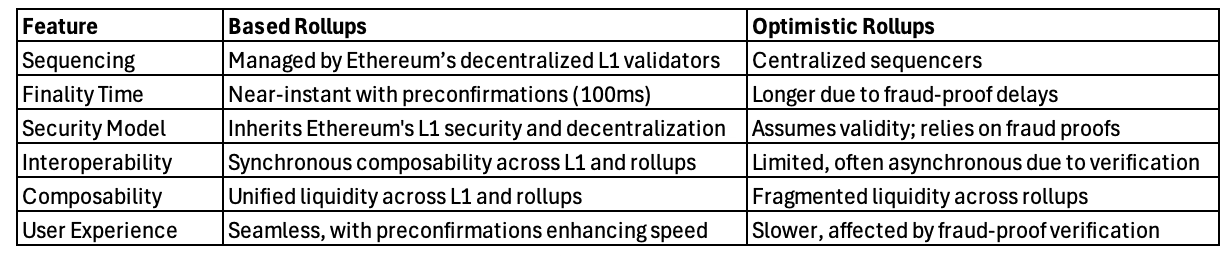
Based Rollups > Optimistic Rollups

tl’dr:

By streamlining the transaction sequencing processes on the base layer, it becomes possible to lower costs, enhance speed, and preserve the security and decentralization inherent in the Ethereum network.

Puffer is Based

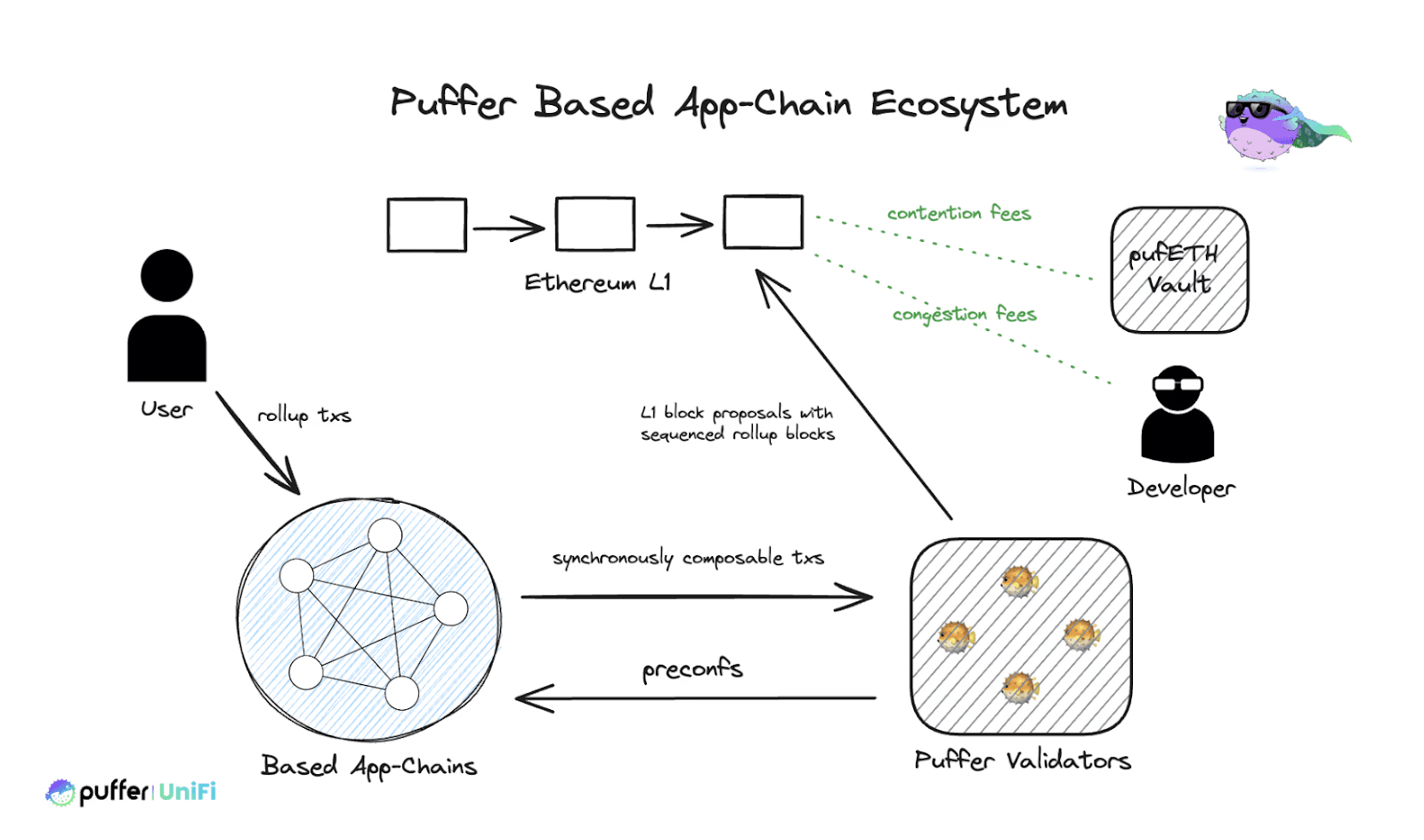
UniFi is a based roll-up to Ethereum, allowing the creation of app chains through their stack.

They address Ethereum’s liquidity fragmentation by enabling synchronous composability. Transactions on UniFi can interact directly with other based rollups, eliminating the need for bridges and creating a unified liquidity and app layer. Developers can launch their own app-chains with ease, capturing transaction fees and leveraging shared liquidity.

They aim to bring atomic composability to Ethereum – redefining what’s possible on-chain. Through atomic composability, UniFi will allow smooth, integrated interactions between Layer 1 and Layer 2 within one Ethereum block. Picture a user or protocol depositing assets into UniFi from L1, performing complex actions like swaps or yield farming, and then withdrawing back to L1 — all within a single 12-second Ethereum block. This is not only fast but also represents a significant advancement in blockchain interoperability.

Instead of working against the L1, Puffer works with the L1 and extends its capabilities in an integrated manner.

How does it work?

Inspired by this collaborative research with Justin Drake, Puffer UniFi uses TEEs for its procer stack. To achieve real time proving Puffer aims to use TEEs as teaining wheels. Real time proving enables better interoperability. Once ZK provers get fast enough the prover can be evolved from trusted hhardware to Zero Knowledge.

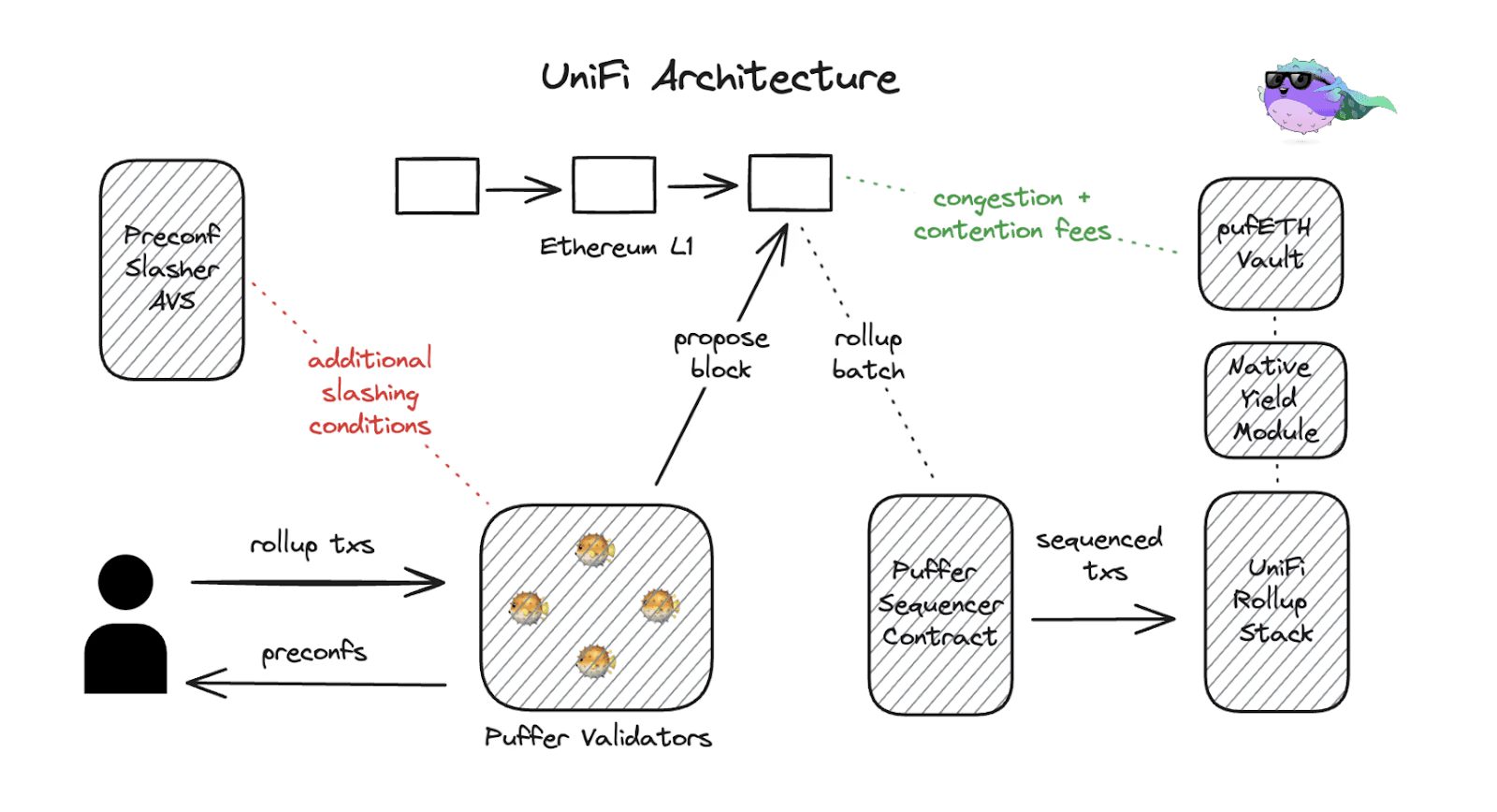
Puffer’s architecture explained

Architecture overview – Puffer’s UniFi Preconf AVS provides L2 Execution confirmations to users. Users interacting with UniFi can enjoy the sub-second transactions. In UniFi general purpose rollup native yield tokens can be used as gas token.

The consensus, data availability, and settlement layers are all components of the base Layer 1, which is Ethereum in this case. The roll-up, on the other hand, is responsible solely for the execution layer.

This is what makes the Puffer app-chain special.

Why should you care?

Puffer is utilizing based roll-ups to create its own app-chain, allowing EVM protocols to integrate seamlessly. This presents an opportunity for everyone in the ecosystem, from individual validators to large-scale dApps, to participate in and gain from a faster, more efficient, and more decentralized Ethereum. Ethereum has been fragmented for far too long and it’s time to change that.

Ecosystem overview:

The growth will occur in phases:

In Phase 1 , they will introduce based roll-ups to users and developers. Protocols that are not yet comfortable on running their own app-chain will have the ability to deploy directly on UniFi.

In Phase 2, the UniFi SDK will be launched to enable any dApp developer to spin up an app-chain in a streamlined way.

Part 2: UniFi Preconf AVS

UniFi offers near-instant execution confirmations through preconfs. It’s more than just an increase in speed — it’s a completely new approach to Ethereum scalability. Preconfs are  a solution that solves Ethereum’s fragmentation issues  and offers blazing-fast confirmations.

How? As rapid transaction finality is often limited by Ethereum’s 12-second block times, pre-confirmations (preconf) become essential for user experience. To address this, Puffer has developed a proprietary preconf AVS that provides near-instant assurances (~100ms) that transactions will be included in the next block, elevating both the speed and reliability of the based rollup ecosystem.

How does it work?

There are two types of preconfirmations (preconfs): Execution and Inclusion. Both can be utilized to provide users with faster confirmations on L1 or L2s. Execution preconfs have the advantage of offering a final, guaranteed commitment to the user, including confirmation of the transaction state upon execution. For instance, they can confirm the price at which a trade was executed and providing better user experience.

Implementing L1 execution preconfs is challenging; however, L2 execution preconfs address this issue effectively. Puffer UniFi AVS leverages this capability to deliver an enhanced UX.

Pre-confirmations require robust guarantees. Since a preconf represents a commitment by the proposer (validator or delegated proposer), failing to honor it should result in penalties, such as slashing. Restaking protocol such as EigenLayer plays a key role in providing slashing security for preconfs. Notably, Puffer UniFi Preconf AVS is the first AVS of its kind to operate on EigenLayer.

UniFi as a catalyst for Ethereum’s next chapter: unification

UniFi’s synchronous composability is game-changing. Cross-rollup interactions occur as if they’re on a unified chain, eliminating the need for L2 bridges (nobody likes to bridge), reducing costs, and mitigating security risks associated with moving assets. UniFi’s approach unifies liquidity and allows developers and users to seamlessly interact across chains, driving liquidity and improving user experience on Ethereum like never before.

For developers, UniFi presents a unique opportunity to scale their applications within a unified, low-friction environment. By eliminating centralized sequencing, UniFi drastically reduces operational costs and allows developers to focus on their product without worrying about the complexities of managing isolated L2s. UniFi’s setup makes launching a based rollup nearly as simple as deploying a smart contract, significantly lowering entry barriers for developers and encouraging innovation.

Revenue Unlocked: How Puffer’s Based Rollups and Preconfs Drive Value in Ethereum’s Ecosystem

All revenue streams will generate treasury rewards, governed by the $PUFFER token.

Puffer’s upgraded revenue model (remember, not just an LRT) leverages based rollups and preconfirmations to create sustainable value across the Ethereum ecosystem. With based rollups, Puffer generates sequencing fees by enabling Ethereum validators to manage transaction ordering. This approach supports seamless interoperability between Ethereum’s L1 and L2, as well as among L2s, creating unified liquidity and composability. Through sequencing fees integrated within Ethereum’s validator network, Puffer captures transaction-based revenue while reinforcing Ethereum’s native economic value.

Users can offer preconfirmation tips to prioritize their transactions, generating an additional revenue stream for Puffer alongside transaction inclusion fees. These fees and tips are routed back into Puffer’s ecosystem, enriching its native tokens, pufETH and unifiETH, and providing yield to token holders.

As Amir, contributor Puffer, explains:

“If every user pays an extra fee for these pre-confirmations to ensure a faster and more reliable transaction on Ethereum, the AVS is tied to every transaction a user makes on Ethereum. This creates a very powerful revenue-generating AVS that can sustainably provide organic yield without needing another token or secondary mechanism.”

Introducing vePuffer

A key aspect that makes a protocol achieve sustainable long-term price action is tokenomics. A great protocol must have well thought out token models, with a focus on providing value towards long-term holders. At Mechanism Capital, we have a core focus on tokenomic designs. We support teams that innovate and maximize their token’s value capture.

Puffer Finance is launching vePuffer as a tokenomics update. The aim is to trickle down value to holders and align incentives throughout the ecosystem. They are doing so by introducing the following:

Decentralized Governance : vePUFFER lets the community vote on PUFFER point allocations, aligning with Puffer’s decentralization goals.

Tradeable Points : Season 2’s ERC20 PUFFER points allow for trading, enabling early profits or additional purchases, adding flexibility and speculative potential.

Flexible Strategy : Tradable points give users control to hold, sell, or buy based on personal strategy and market sentiment, enhancing risk management.

Bribery Market : Protocols can offer incentives to vePUFFER holders to boost votes for their pools, increasing APRs and liquidity.

Competitive Protocols : The bribery system lets protocols attract votes to improve APR, driving engagement and creating aligned incentives.

Community-Driven Rewards : The vePUFFER model fosters governance, speculation, and diverse strategies, empowering users to shape ecosystem incentives.

Why Puffer’s UniFi Stands Out: Revolutionizing Ethereum’s Rollup Landscape

With the launch of UniFi, Puffer has created an opportunity for Ethereum to transition from a fragmented rollup environment into a cohesive, positive-sum landscape that brings developers, users, and liquidity together in unprecedented ways. The result? A stronger, more resilient Ethereum that can meet the needs of billions.


Disclaimer: Nothing in this article constitutes investment advice.

Mechanism Capital is an investor in Puffer alongside Binance Labs , Coinbase , Fidelity Investments , Brevan Howard, Franklin Templeton and Mr Block .